Where the idea of a story studio in your phone came from
Tellavio started from a simple assumption: an audio story can go from text to a finished file on a phone or tablet, in your own voice, with no account and no internet.
The first of eight posts about how Tellavio is being built, told in the order things happened.
If you have ever recorded a longer text, you know the routine. Text in one program, recording in another, cutting out slips in a third, music in a fourth. Plus a computer, headphones and a quiet evening hour. For short pieces, like a story for a guided walk or an article to listen to, that routine takes longer than the reading itself.
One place from text to file
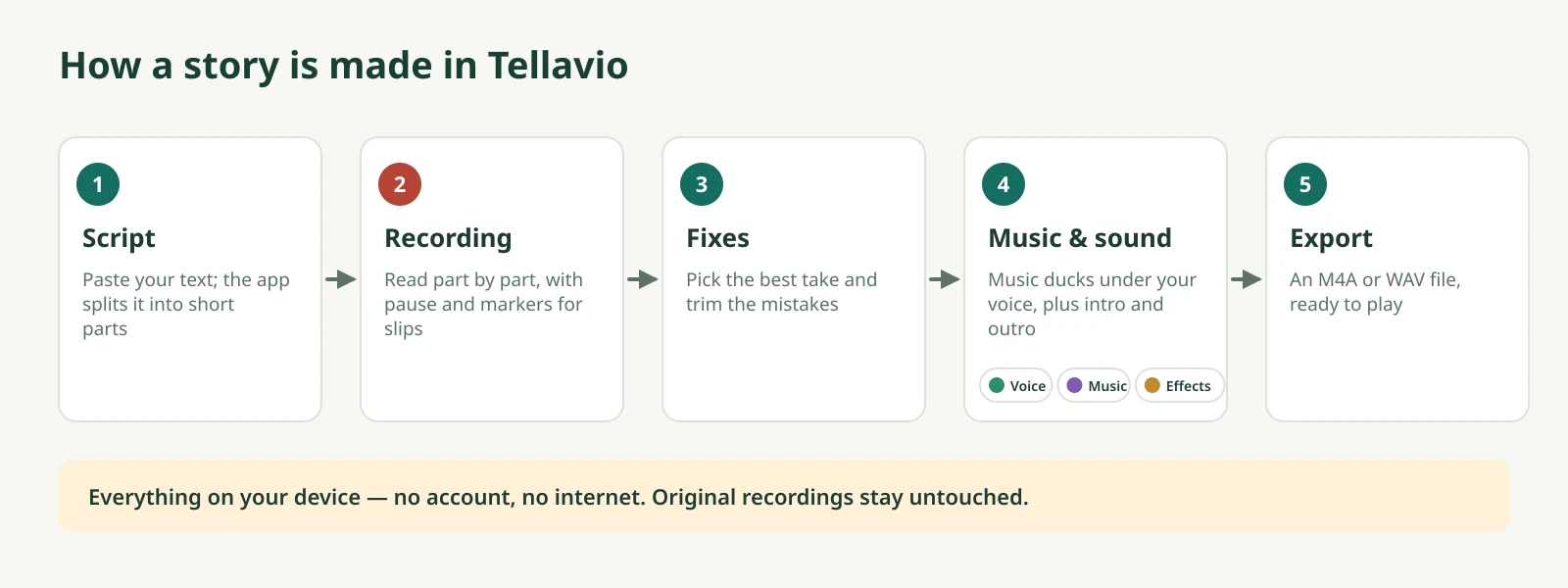
The idea was simple: everything such a story needs should fit into one app on a phone or tablet. You paste the text. The app splits it into short parts. You read part by part, and when you slip, you record just that part again. At the end you add music and export a finished file.
Your voice, not a synthesiser
From day one we decided that a person does the reading. Tellavio is not a speech generator or a voice-cloning tool. It is meant for people who want to tell stories themselves: writers, guide creators and narrators.
No account, no internet
The second rule: recording, editing and export work without an account, a server or a network. The specification from 5 October 2026 opens with a test every version has to pass. In airplane mode you create a project with eight parts, record them all, fix one, add an intro and music, export, and play the result in another player. No sign-in, no downloads.
Cloud backups, sync or collaboration may come later, but only as extras. Your recordings stay on your device until you decide otherwise.
Phone and tablet
Two Samsung devices became the reference hardware: a phone from the Galaxy S21 line and a Galaxy Tab S7+ tablet. A phone is always at hand. A tablet shows two panels side by side, for example the text and the recorder. The app has to work well on both, and on cheaper phones too.
The name
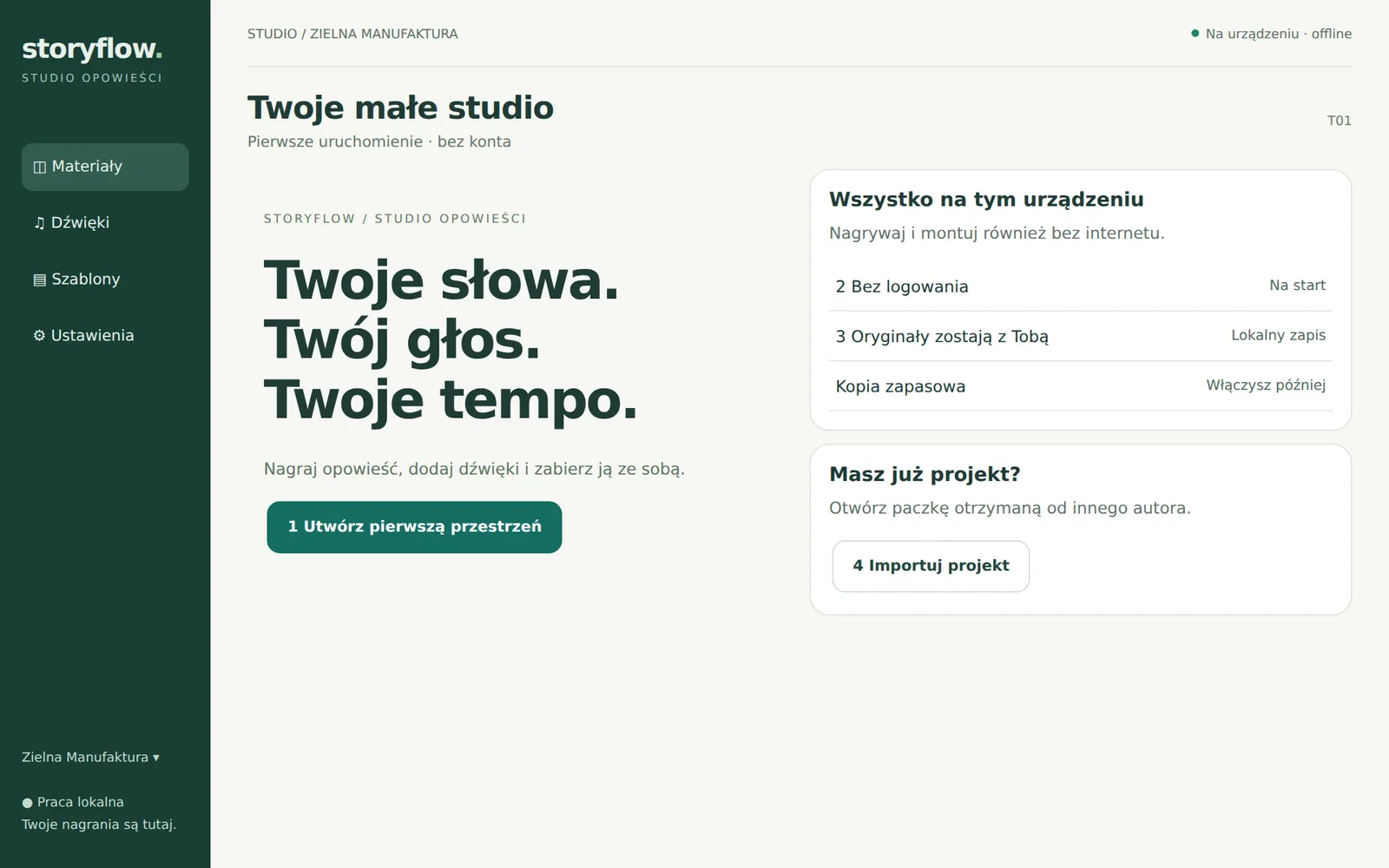
The project started under the working name StoryFlow. On the same day, 5 October, we chose the name Tellavio, matching the tellavio.com domain. That is why mock-ups from the first days still show the old name.
Next time: how the mock-ups and the plan came about before the first line of code.